Inside cricket’s $3 billion workaround
The broadcaster finds itself trapped in a $3 billion contract it can’t afford and can’t exit. The workaround taking shape will determine whether Indian cricket’s decade of growth was sustainable or inflated.

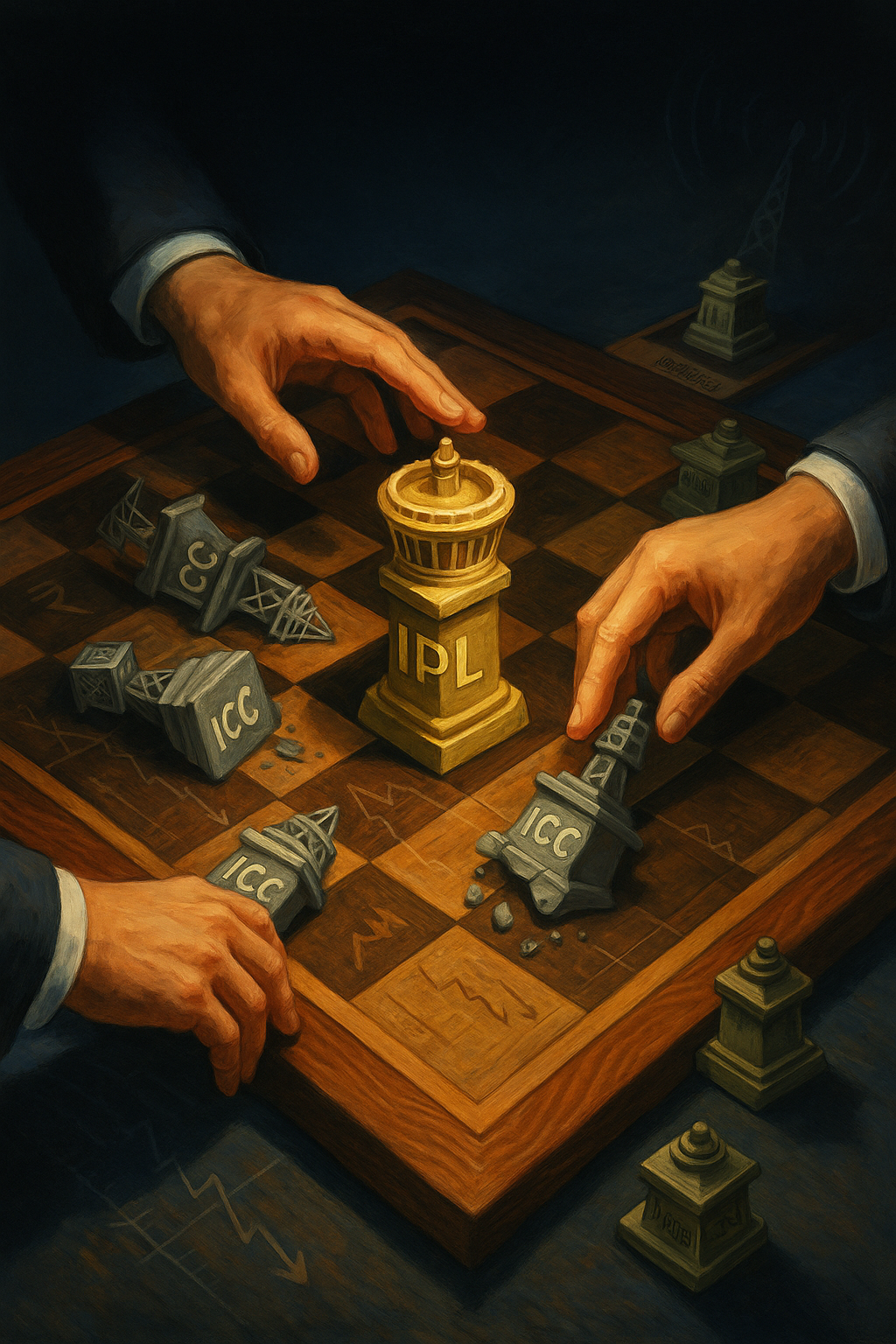
By the time JioStar informed the International Cricket Council (ICC) that it could no longer support the final stretch of its four-year, $3 billion media rights deal for the India market, most people inside cricket’s commercial circles had already adjusted to the idea.
The broadcaster and the ICC have been exploring ways to rework the agreement for weeks, including a possible extension of the cycle at terms that remain apart. Monday’s Economic Times report observed a moment that the industry had been expecting.
JioStar holds a unique position in Indian cricket. The broadcaster owns Indian Premier League (IPL) rights through 2027, manages the ICC deal now under strain, and carries the bilateral agreements that anchor India’s home season. The ICC deal is also unusually rigid, leaving the broadcaster with little room to manoeuvre. When all three contracts come under pressure simultaneously, the entire market responds.
JioStar and the ICC did not respond to The State of Play’s requests for comment.
People familiar with the discussions say JioStar is examining a two-year extension of its ICC rights through 2029, though the terms remain under negotiation. The ICC has outlined a framework valuing the combined period at $2.4 billion, with around $1.8 billion representing what remains of the current contract (or residual value in industry speak), and $600 million covering the two additional years. JioStar has pushed back on that valuation, prompting the ICC to consider proposals involving additional match inventory—possibly including new men's and women's tournaments—to help justify the higher figure, sources added.
The result, following the pushes and pulls of a typical negotiation, is likely to be an ICC deal that merely extends the rights cycle to 2029, at no material increase over its previous $3.04 billion value.
The company is also preparing for the 2027 IPL renewal, where industry insiders (as optimistic as they sound) suggest growth might land in the 10% range rather than exponential increases once expected, while bilateral commitments will be revisited as those deals reach their natural renewal points. “This could mean pushing for more white-ball matches (T20Is and ODIs), with only marquee home Test series,” one source said.